Credits
Every photograph on this site
Licences were checked on each Wikimedia Commons file page on 17 November 2026. CC BY-SA images are used on the website only, and are not placed in the downloadable fact sheets.
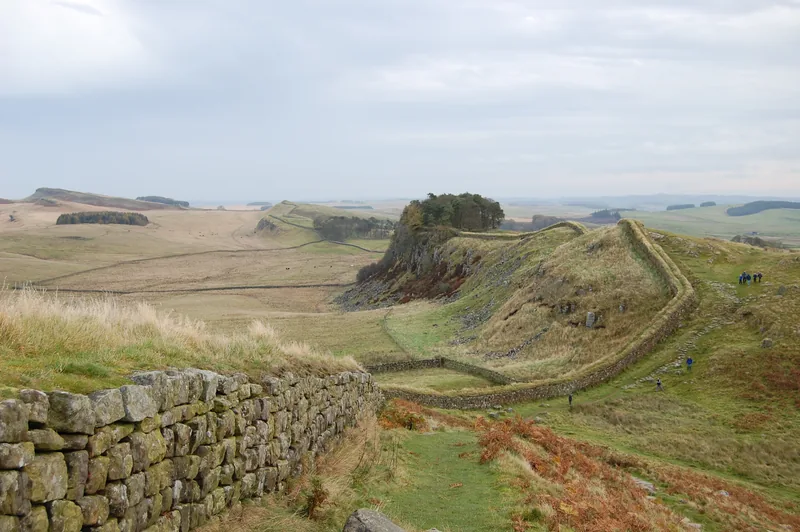
Hadrian’s Wall west of Housesteads, photographed by Steven Fruitsmaak. English Heritage says the emperor Hadrian, visiting Britain in AD 122, ordered a wall to stretch from sea to sea, and that it was mostly complete by AD 130. The file is in the public domain. Photo: Steven Fruitsmaak · Public domain · Wikimedia Commons 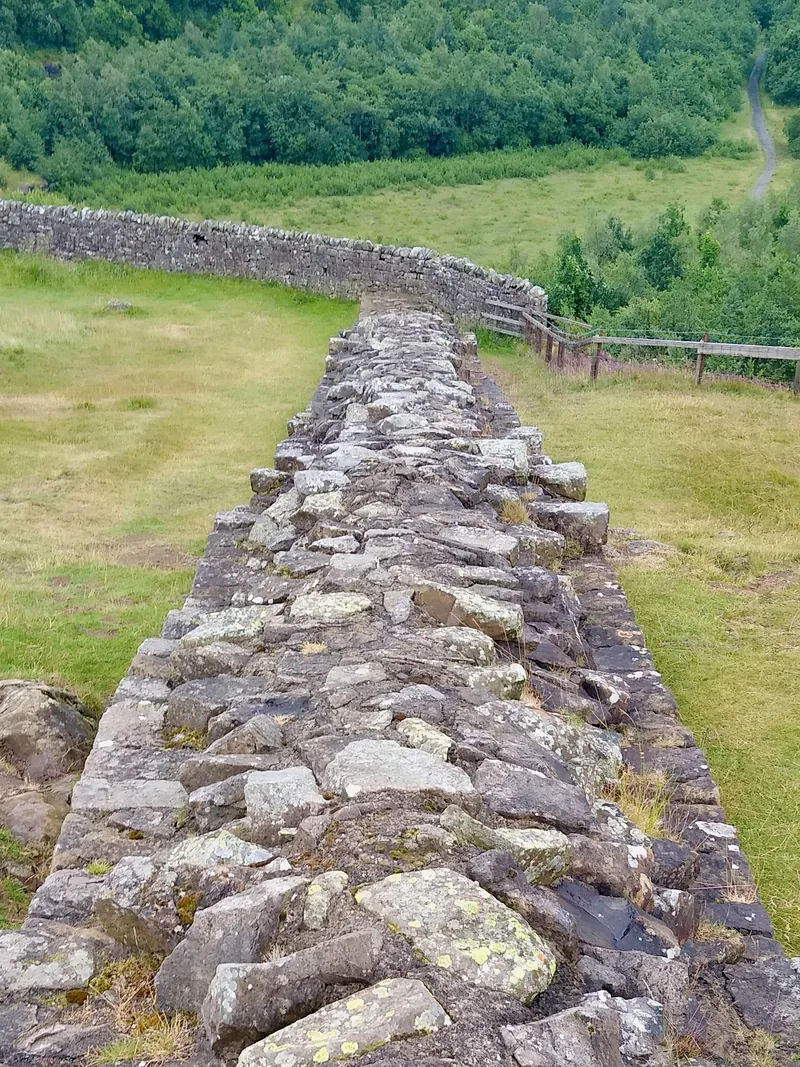
Hadrian’s Wall east of Walltown Quarry, Northumberland, photographed by Mertbiol. The file is CC0 1.0. Photo: Mertbiol · CC0 1.0 · Wikimedia Commons 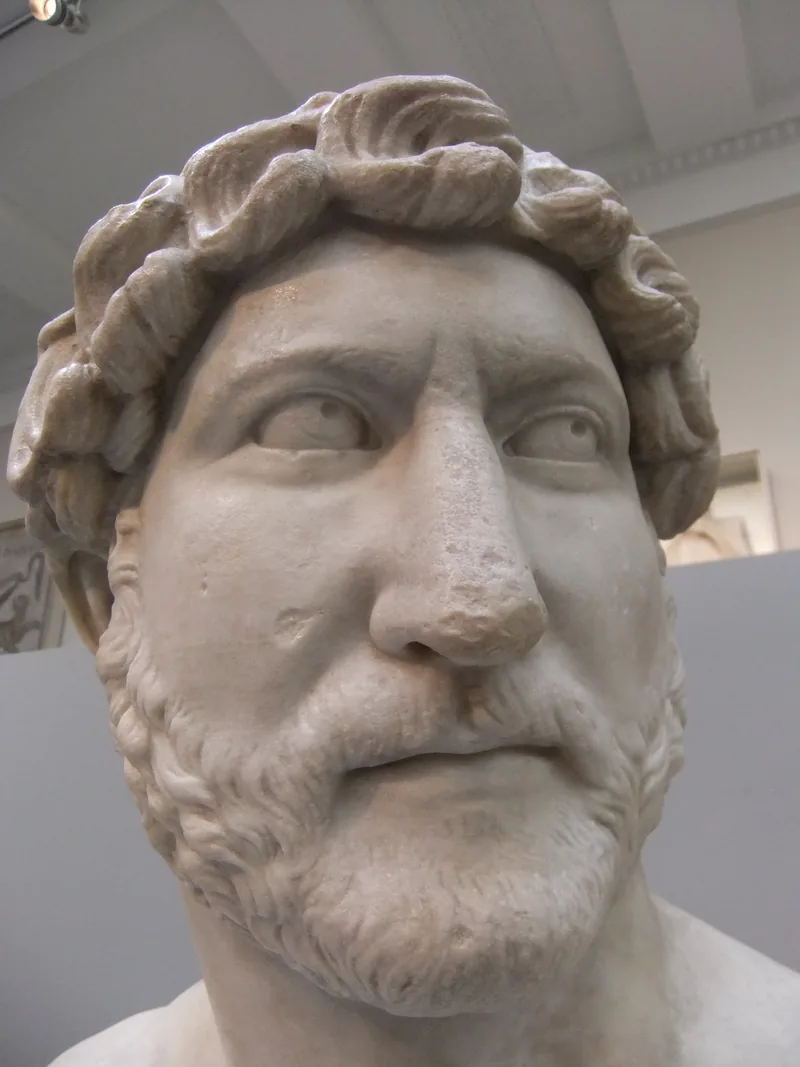
A bust of the emperor Hadrian in the British Museum, photographed by Orangeaurochs. English Heritage says Hadrian was born in Rome in AD 76 and became emperor in AD 117, succeeding Trajan. The file is CC BY 2.0. Photo: Orangeaurochs from Sandy, Bedfordshire, United Kingdom · CC BY 2.0 · Wikimedia Commons 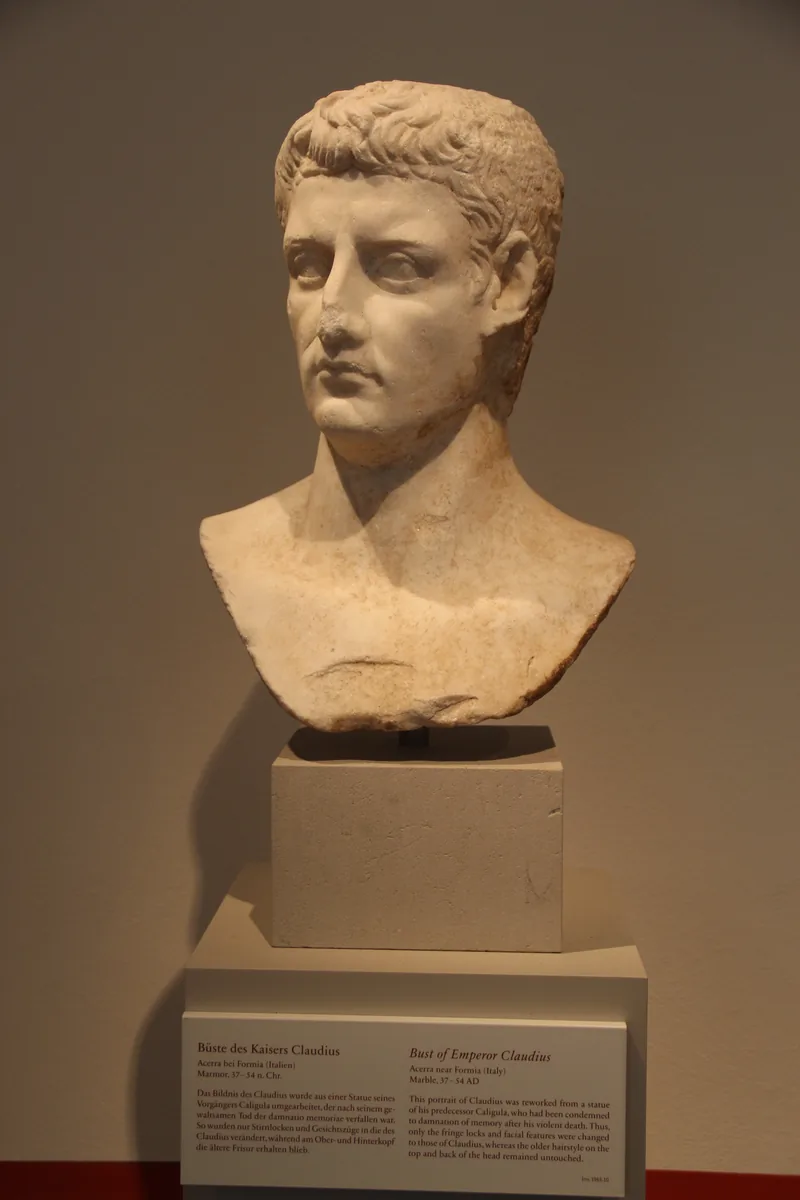
A marble bust of the emperor Claudius, photographed by Gary Todd. The Commons file is titled with the dates 37–54 AD. English Heritage says Claudius sent an army to Britain in AD 43. The file is CC0 1.0. Photo: Gary Todd from Xinzheng, China · CC0 1.0 · Wikimedia Commons 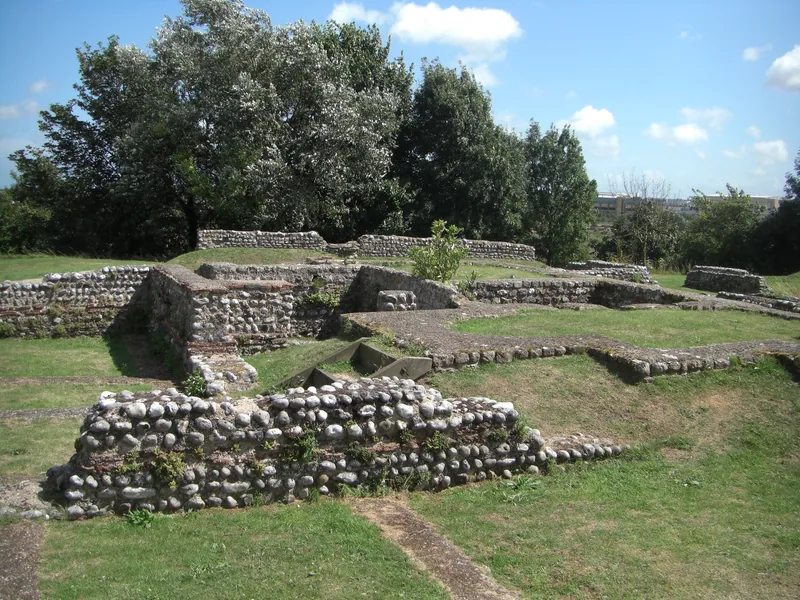
Richborough Roman Fort, photographed by Midnightblueowl. English Heritage says the army of AD 43 probably landed at Richborough in Kent, and notes that the impressive stone walls there belong to a later, 3rd-century fort, and that the coastline was closer then than it is today. The file is in the public domain. Photo: Midnightblueowl · Public domain · Wikimedia Commons 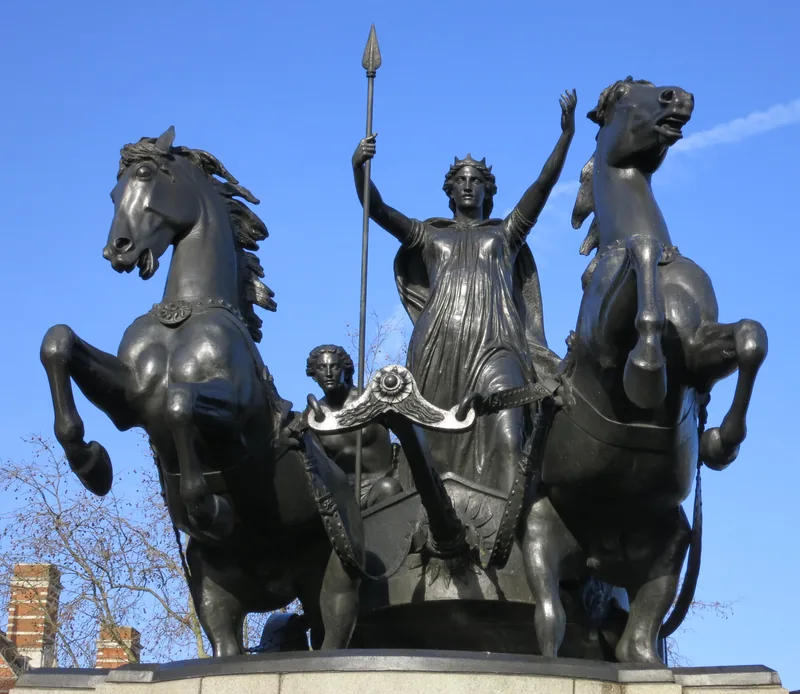
The statue of Boudica at Westminster, photographed by Paul Walter on 30 January 2013. It is a later public sculpture, not a Roman portrait. English Heritage says Boudica, queen of the Iceni, led a revolt in AD 60 that burned Camulodunum (Colchester), Verulamium (St Albans) and Londinium (London). The file is CC BY 2.0. Photo: Paul Walter, 30 January 2013 · CC BY 2.0 · Wikimedia Commons 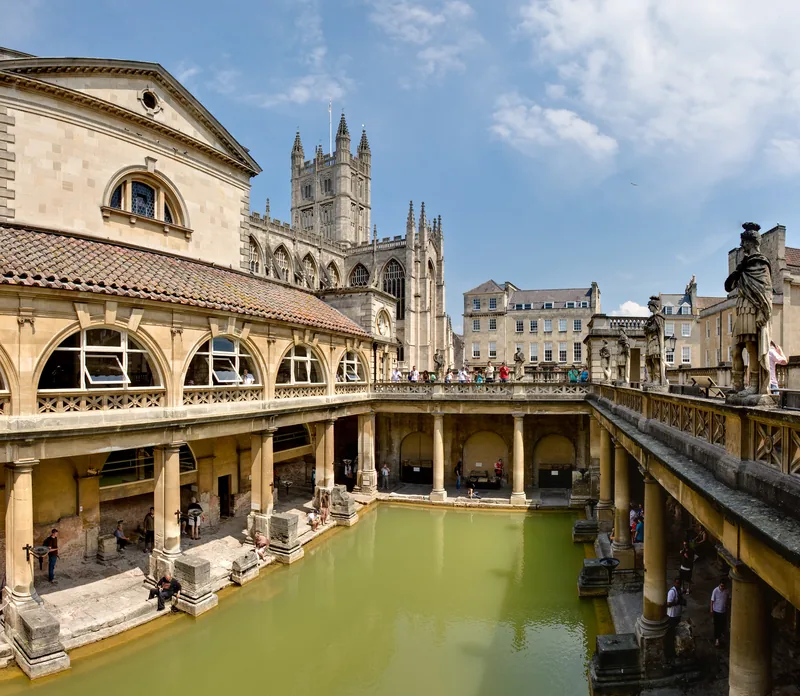
The Roman Baths at Bath, photographed by David Iliff (Diliff) in July 2006. The pool is Roman. The colonnades, terrace and the tower of Bath Abbey behind are later. English Heritage, on its ingenuity page, gives the Roman town as Aqua Sulis (Bath). The file is CC BY 2.5. Photo: David Iliff (Diliff), July 2006 · CC BY 2.5 · Wikimedia Commons 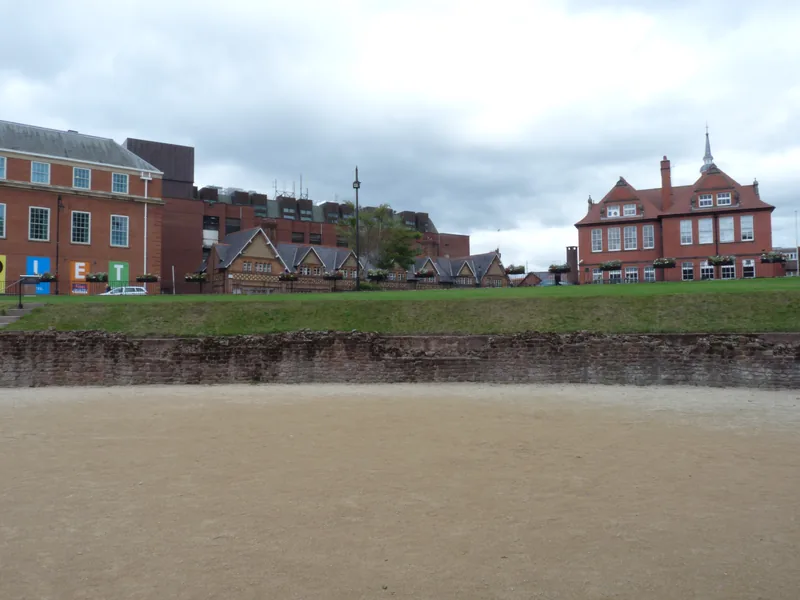
Chester Roman Amphitheatre, photographed from the centre by Chris McKenna. English Heritage lists three permanent legionary bases of 4,800 men at Caerleon, Chester and York, using those modern names. The file is CC BY-SA 3.0 and is used on the website only, not in the typographic fact sheets. Photo: Chris McKenna · CC BY-SA 3.0 (website only) · Wikimedia Commons 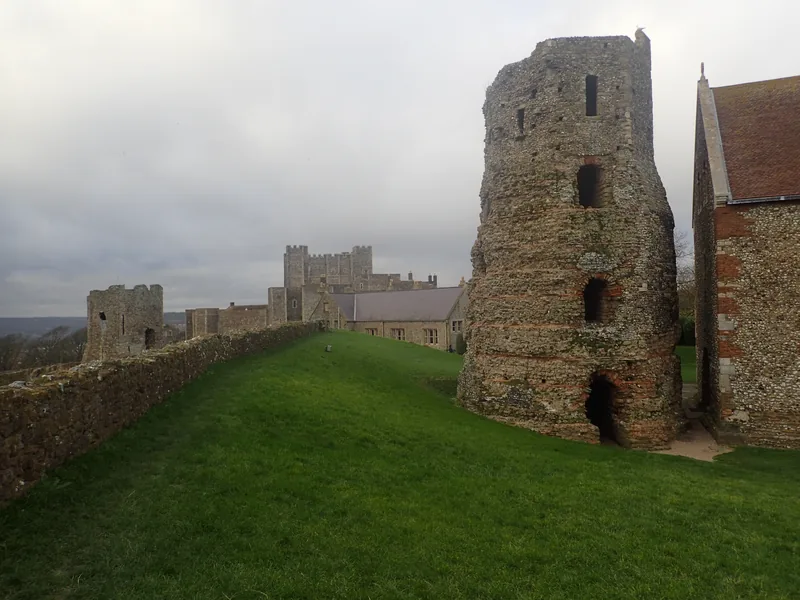
The Roman pharos at Dover Castle, photographed by Marathon. The photograph shows a Roman lighthouse that still stands; this site does not attach a further official story to the picture beyond the file’s own identification. The file is CC BY-SA 2.0 and is used on the website only. Photo: Marathon · CC BY-SA 2.0 (website only) · Wikimedia Commons 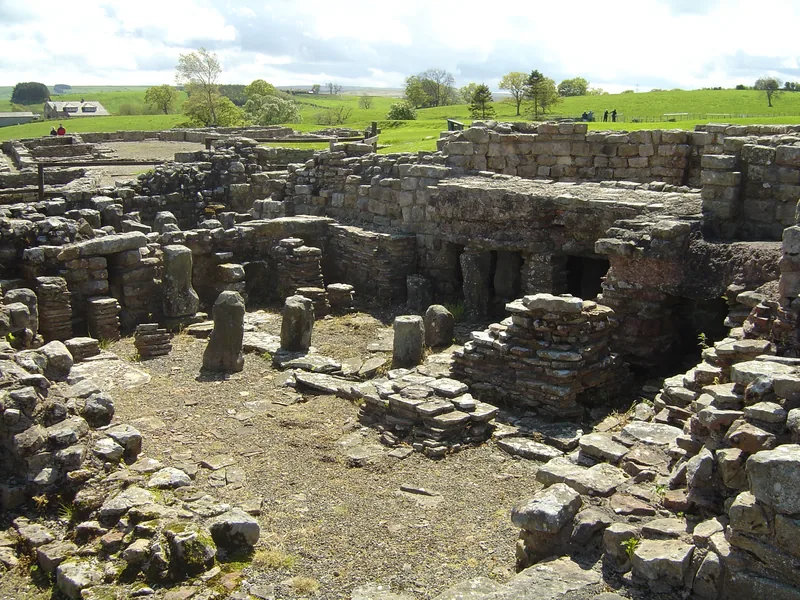
The bath-house at Vindolanda, photographed by Voice of Clam on 19 May 2007, with the stacked tiles of a hypocaust visible. The file is in the public domain. Photo: Voice of Clam, 19 May 2007 · Public domain · Wikimedia Commons 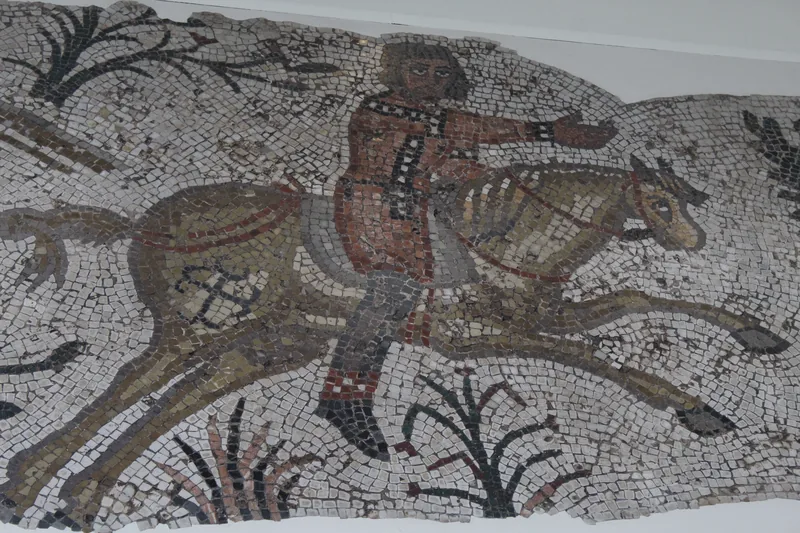
A horseman-and-hound mosaic in the British Museum, photographed by 14GTR. The pavement comes from Roman Britain. It is not the geometric mosaic from a house at Aldborough described on English Heritage’s introduction. The file is CC0 1.0. Photo: 14GTR · CC0 1.0 · Wikimedia Commons 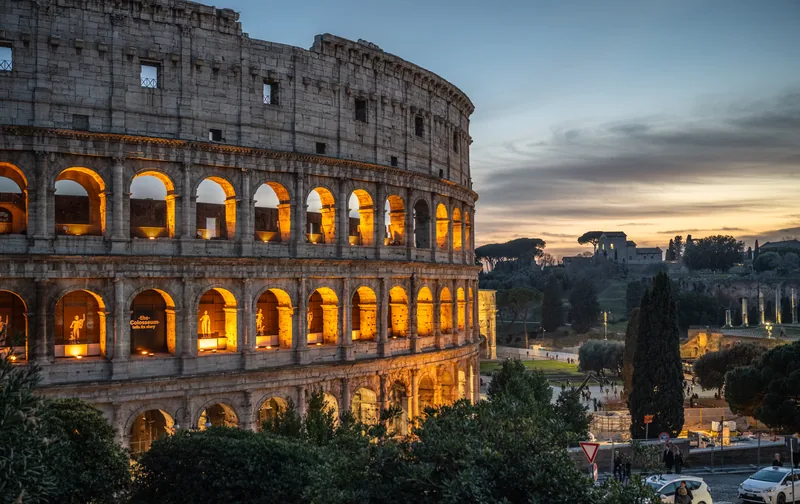
The Colosseum in Rome, photographed by Wilfredor. This is in Rome, not in Roman Britain. It is included as a picture of the empire’s capital, not as a British monument. The file is CC0 1.0. Photo: Wilfredor · CC0 1.0 · Wikimedia Commons
Enjoyed this Roman desk?
No pop-ups. No intrusive advertising. Just interesting stuff. A little support helps the next ages.im site get built.