Towns, roads, and a global coin
A veneer of officials, and a denarius that could be spent in Turkey
English Heritage is careful about everyday life. In the far West, Wales and most of the North, “the army always remained at the forefront of daily life.” In the Midlands, South and East, “urban civilisation developed.”
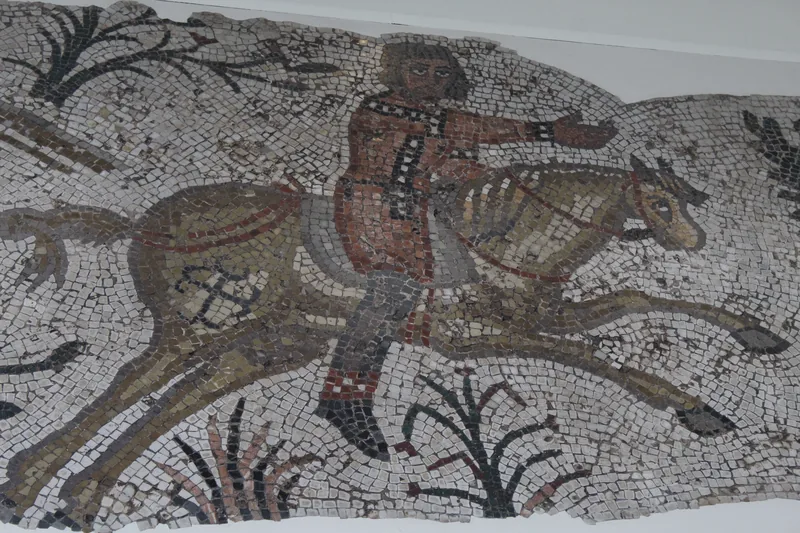
“There was never a massive influx of ‘Romans’.” The people of Britannia “were mostly the descendants of the pre-Roman tribes,” living and working “mainly in the countryside.” There was “a veneer of Roman officials, while the troops were originally recruited from provinces across the empire.” The population “was probably between 3 and 4 million, of which the army comprised up to 50,000.” [source]
The province “was divided into large administrative areas, or civitates, based on the tribal territories.” Each had a capital, “for instance at Silchester, St Albans, Aldborough and Wroxeter.” Those towns “were planned and built along Roman lines.” “Between around AD 70 and the later 2nd century, such towns generally grew and prospered.” [source]
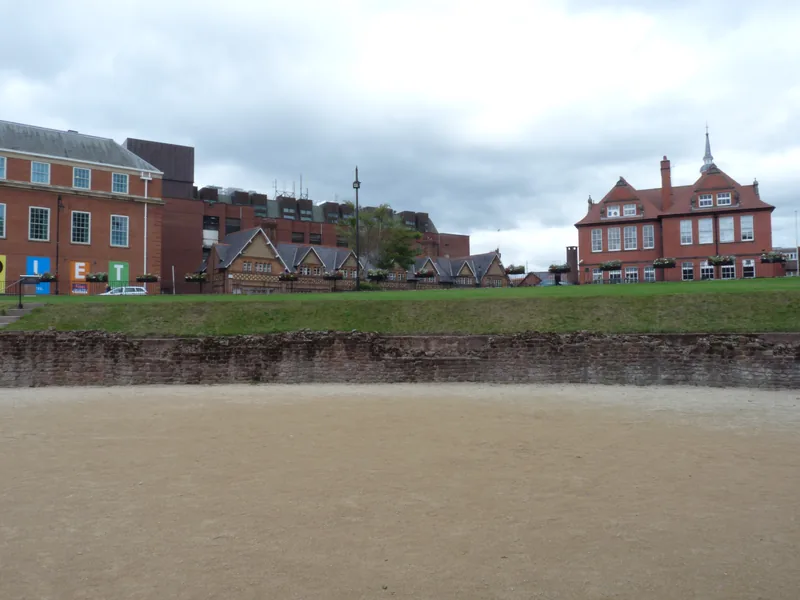
Straight roads, and a wall 80 Roman miles long
“The Romans introduced a more formalised road system to Britain, measuring distances and making more substantial roads than existed before.” “Many Roman roads, such as Watling Street (the A2 and A5) and Dere Street (A59 and A1 from York) still form the basis of routes used today.” A Roman mile, the mille passum, was a thousand paces, and “a pace was five Roman feet, meaning a Roman mile measured 5,000 feet.” [source]
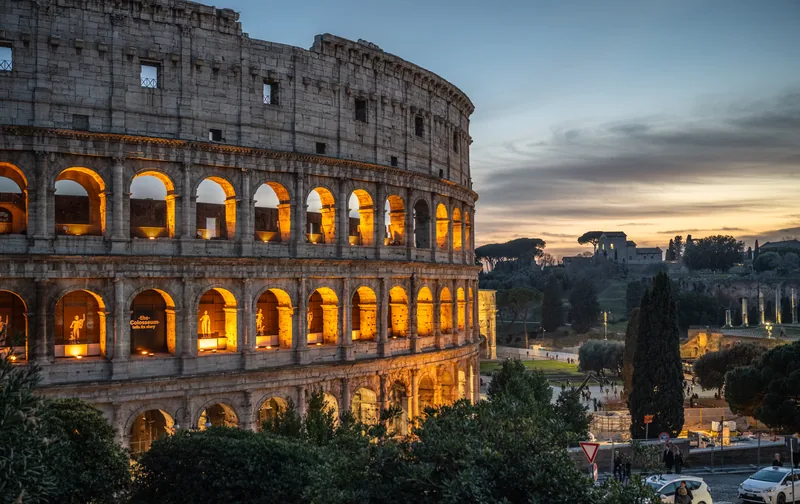
The Colosseum in the photograph is in Rome, not in Britain. It stands here as a picture of the empire’s capital — the place a denarius might be minted — not as a British monument. [source]
A currency not seen since
“Before the Romans arrived, coinage wasn’t in use in northern Britain — although parts of Southern Britain did have coins.” Soldiers on the wall “were paid in coins,” and locals who wanted to do business “need to be part of the Roman monetary economy.” “A denarius minted in Rome could be spent in Britain, North Africa or Turkey, such a global currency has not been seen since.” Some people “introduced counterfeit coins,” including a copper-cored, silver-plated example from outside the fort at Housesteads. [source]
Keep exploring
- Discoveries — the Housesteads fake, and the Corbridge Hoard.
- Where was that? — the official names of the towns.
- Hadrian’s Wall — 80 Roman miles, marked by milecastles.
Enjoyed this Roman desk?
No pop-ups. No intrusive advertising. Just interesting stuff. A little support helps the next ages.im site get built.