From reconnaissance to a formal break
Caesar came twice. Claudius sent an army. By AD 411, the link was formally broken.
English Heritage gives Roman administration in Britain as about 370 years — “the same length of time as now to the end of the English Civil Wars in 1651” — spanning more than 80 emperors.
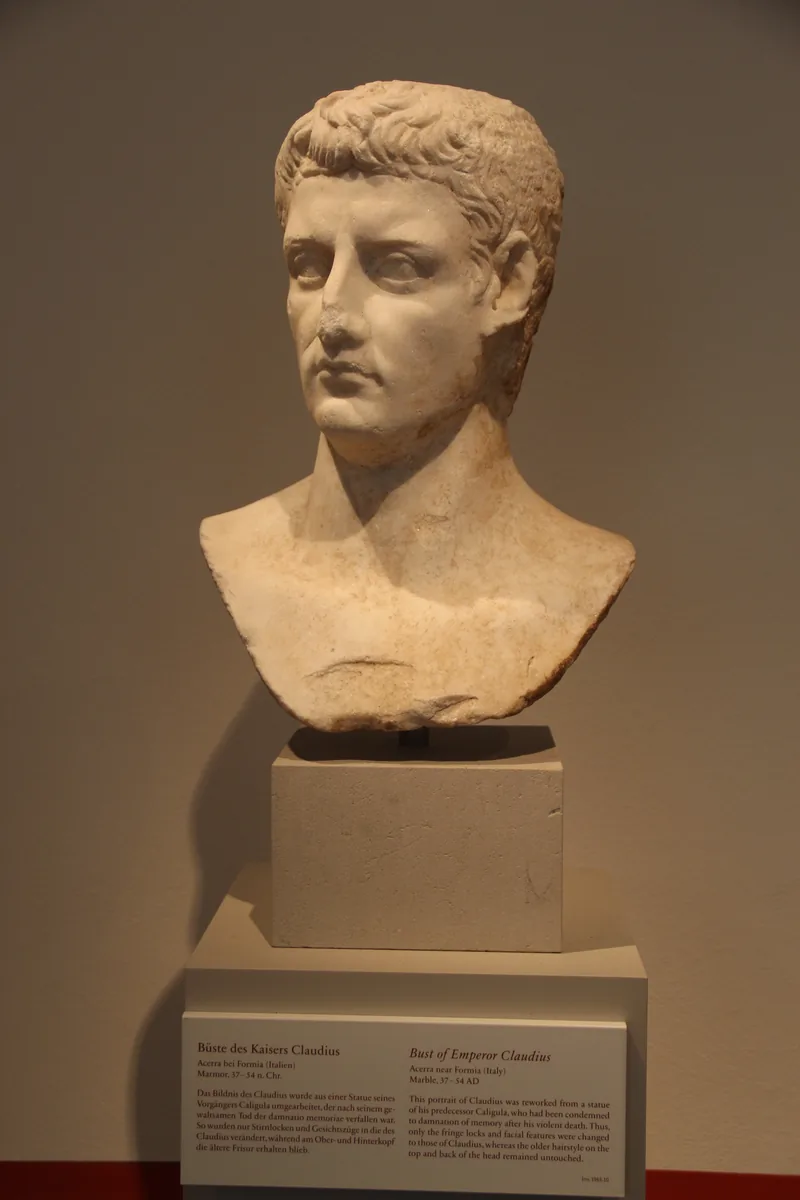
Julius Caesar came first, and left. English Heritage calls the expedition of 55 BC “a reconnaissance” and that of 54 BC “a serious attack,” and says the Romans “did not stay.” The later pretext is equally specific: Verica was expelled in AD 42, and that expulsion became “a pretext for Claudius.” In AD 43 Claudius “sent an army,” which “probably landed at Richborough in Kent.” [source]
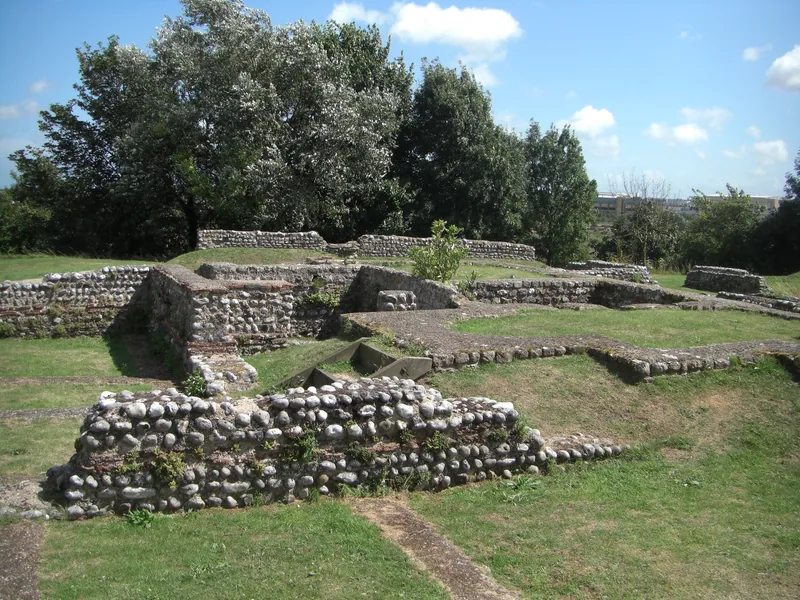
The impressive stone walls at Richborough “belong to a later, 3rd-century fort,” and “the coastline was much closer than it is today.” By AD 47 the army had “a firm grip” on the South and East, with a frontier from Exeter to the Humber. [source]
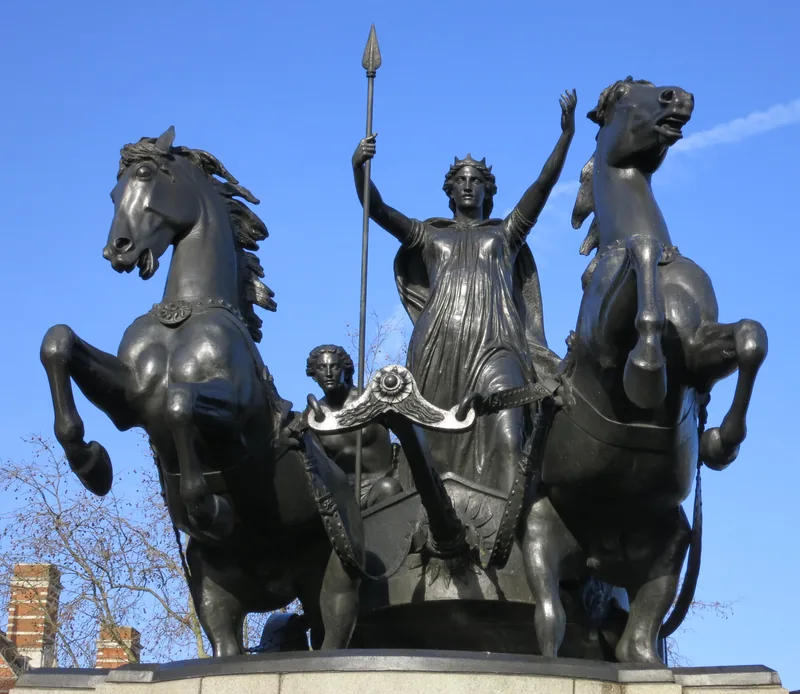
Then comes the revolt. “In AD 60, Boudica, the queen of the Iceni tribe, led a revolt, destroying Camulodunum (Colchester), Verulamium (St Albans) and Londinium (London).” The victory “was short-lived.” Advance resumed around AD 70. Agricola reached “as far as Aberdeen,” and fought at Mons Graupius in AD 83. Troops were later “withdrawn to deal with trouble on the Danube frontier,” and the army “gradually fell back.” By around AD 105 it had “established a new border zone along an east–west road, the Stanegate.” [source]
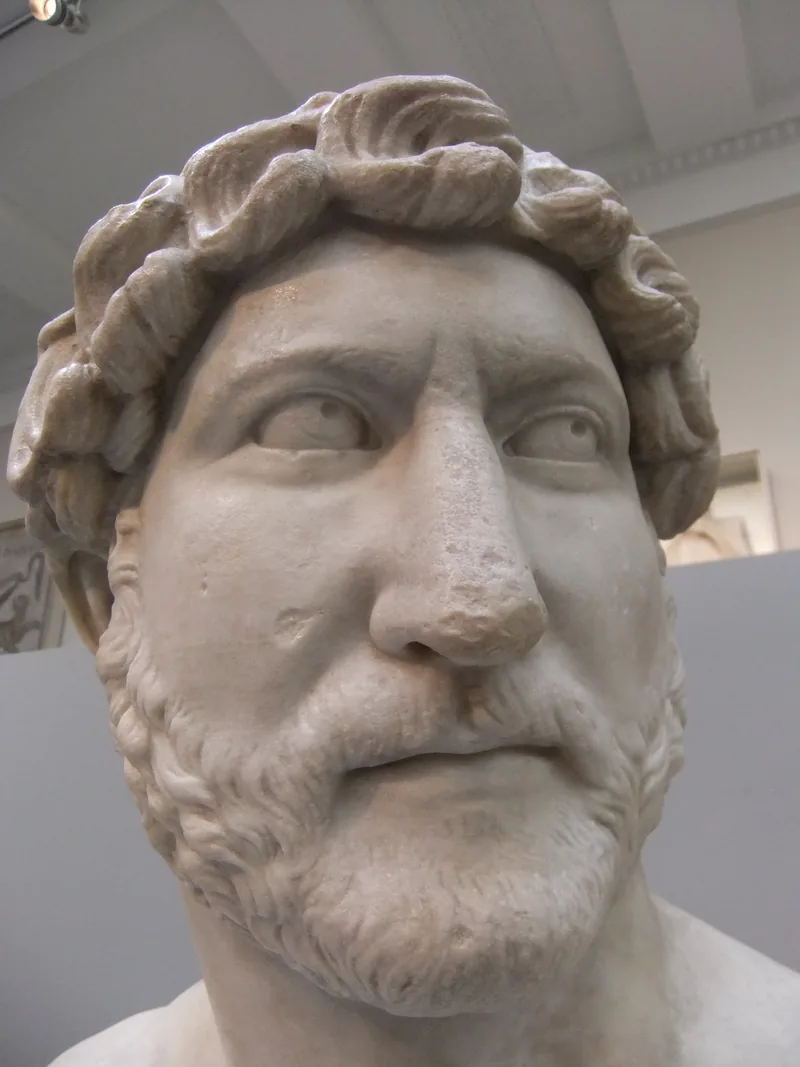
Hadrian’s visit of AD 122, the building of the wall, the short life of the Antonine Wall, and Severus’s campaign of AD 208–11 are told on the wall page. After that the official introduction turns inland. In the early 4th century there was a “villa flourish.” Towns were “not what they had been in the 2nd century.” Grain was exported, and troops were withdrawn in the AD 350s. Trouble came from around AD 360, including the Great Conspiracy of AD 367. Valentinian, who reigned AD 364–75, “strengthened garrisons.” “Confident new building ceased by the AD 370s.” [source]
Two later figures close the official story. Magnus Maximus held power AD 383–8, and Constantine III AD 407–11. “By AD 411” Britain was “formally separated,” and “town life collapsed.” [source]
Keep exploring
- Hadrian’s Wall — the frontier that remained after the Antonine experiment.
- Towns and roads — what “Romanisation” did, and did not, change.
- The timeline — the same official years, in order.
Enjoyed this Roman desk?
No pop-ups. No intrusive advertising. Just interesting stuff. A little support helps the next ages.im site get built.