A frontier of stone
Hadrian’s Wall: 73 miles, or 80 Roman miles
An emperor visited in AD 122 and ordered a wall from sea to sea. The official FAQ gives its length two ways, and keeps them together in one sentence.
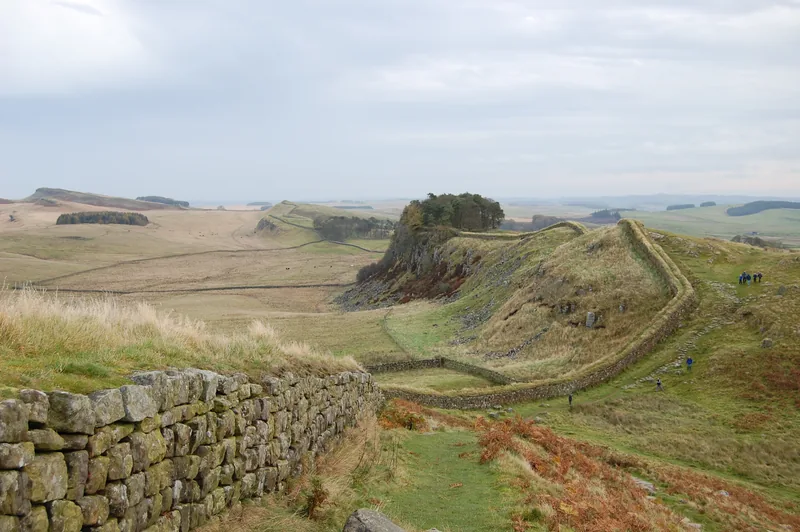
By around AD 105, English Heritage says, the army “had established a new border zone along an east–west road, the Stanegate, between the river Tyne in the east and the Solway Firth in the west.” “It was just a little further north of the Stanegate that the emperor Hadrian, visiting Britain in AD 122, ordered the building of a wall to stretch from sea to sea, as a permanent frontier to Britannia. Hadrian’s Wall was mostly complete by AD 130.” [source]
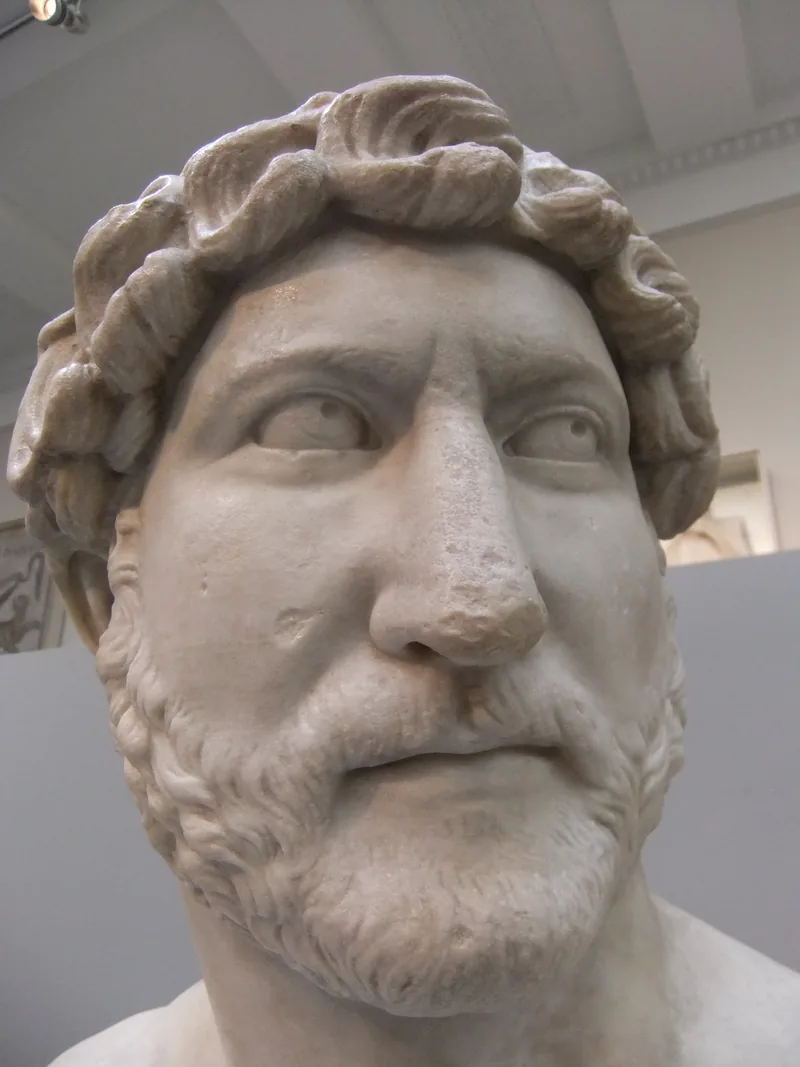
The official FAQ, last updated 6 March 2026 and checked by Dr Frances McIntosh, is careful about the man as well as the wall. Hadrian “was born in Rome in AD 76” and “became emperor in AD 117, succeeding Trajan.” A biographer, in English Heritage’s wording, recorded that he ordered the army to “build a wall, 80 miles long, to separate the Romans from the barbarians.” [source]
How long, how high, how wide?
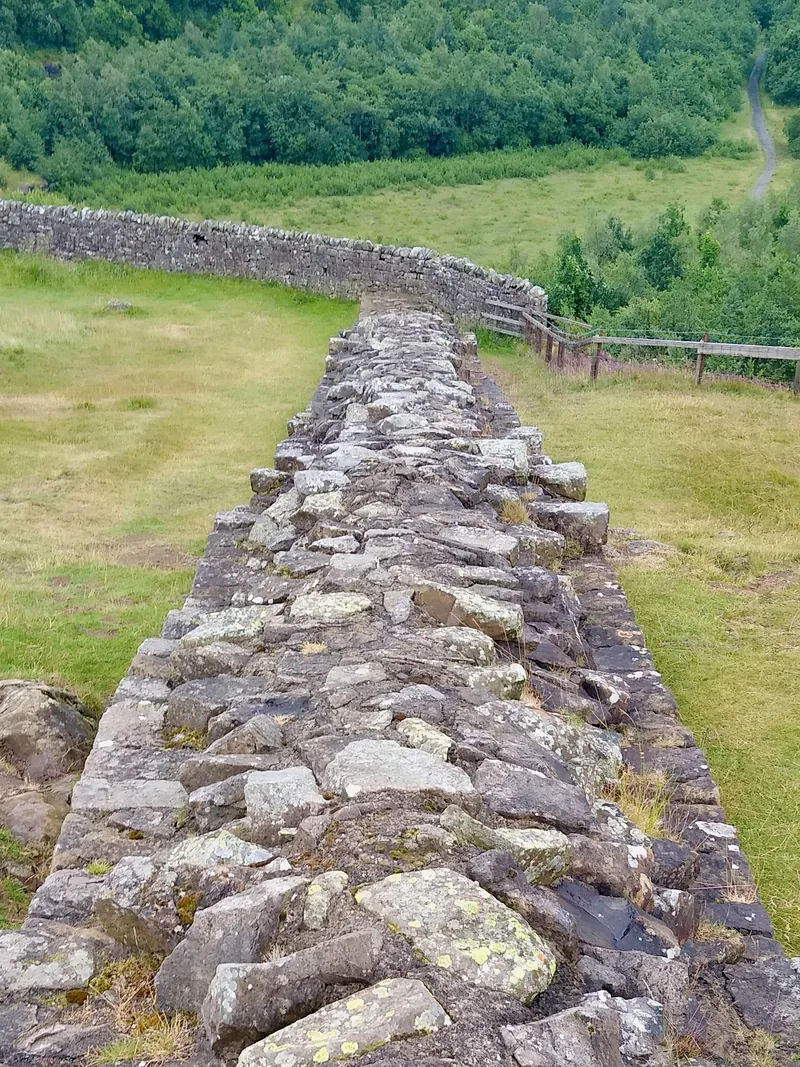
The same FAQ gives the length as “73 miles (or 80 Roman miles),” from Bowness-on-Solway to Wallsend. It took “at least six years to build.” In 2022 English Heritage celebrated 1,900 years of the wall. The tallest remaining parts stand “about 15 feet (4.6 m).” It was planned “10 Roman feet (3 m) wide,” and was built “8 Roman feet (2.4 m) or less.” Those official figures are kept unblended on the field notes. [source]
There is “no technical start or end.” Fortifications “continued around 25 miles down the Solway coast,” and those coastal works “were not part of the wall.” The wall was “built almost entirely” by the Second Legion (based at Caerleon), the Sixth (York) and the Twentieth (Chester). It is a “complex of wall, earthwork, ditch, roads, forts, milecastles, turrets,” and it became a UNESCO World Heritage Site in 1987. [source]
A second wall, and a shorter life
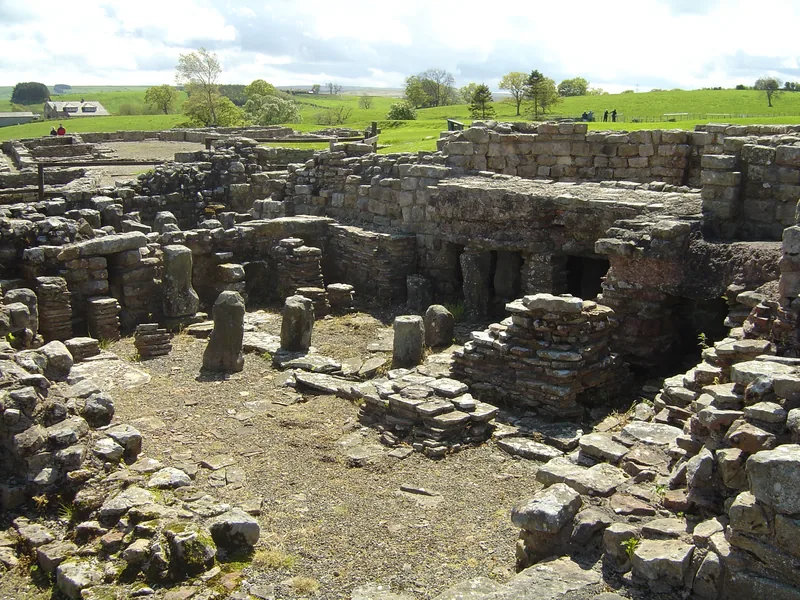
“Within a short time, the emperor Antoninus Pius advanced north again, and from around AD 142 built another wall on the Forth–Clyde isthmus – the Antonine Wall. But this wall only had a short life, being gradually abandoned between AD 158 and AD 164.” Later campaigns still went north, “including a huge campaign by the emperor Septimius Severus in AD 208–11, penetrating beyond the Antonine Wall. But territory was not permanently conquered and Hadrian’s Wall remained the effective imperial frontier.” [source]
English Heritage’s ingenuity page comes back to the mile. “A Roman unit of distance was the mille passum, which translates to ‘thousand paces.’ A pace was five Roman feet, meaning a Roman mile measured 5,000 feet. Hadrian’s Wall is 80 Roman miles long, and each mile was marked by a milecastle fort.” Those milecastles “were used for controlling the movement of people, goods and livestock along the Wall.” [source]
Keep exploring
- Discoveries — the Housesteads toilets, and the Corbridge Hoard.
- Where was that? — Coria, two and a half miles south of the wall.
- The fact file — official lengths, widths and dates, gathered in one place.
Enjoyed this Roman desk?
No pop-ups. No intrusive advertising. Just interesting stuff. A little support helps the next ages.im site get built.